Shipping Lithium Batteries & Hazmat to Amazon FBA: Compliance First, Speed Second
In our previous guide, we explored how Yantian Express Ship moves your standard FBA cargo from Shenzhen to the US in 20–32 days. But when your product contains a lithium battery — whether it’s a power bank, a Bluetooth speaker, or an e-bike — the playbook changes completely.
Speed doesn’t matter if your cargo never leaves the port.
Lithium batteries are classified as Class 9 miscellaneous dangerous goods under UN standards . Amazon’s own policy explicitly prohibits standalone lithium-ion batteries (UN3480) and lithium metal batteries (UN3090) via Amazon Global Logistics — only certain “Section II” lithium batteries packed with or contained in equipment (UN3481, UN3091) are accepted . Meanwhile, European FBA rejects lithium-ion batteries above 60Wh entirely .
This guide walks you through exactly what it takes to move battery-powered and hazmat products from China to Amazon FBA — compliantly, predictably, and without the dreaded “cargo rejected” email.
Step 1: Identify Your Battery Type & FBA Eligibility
Before you book anything, you must know your UN number. This single identifier determines everything:
| UN Number | Battery Type | Configuration | FBA Eligibility (US via AGL) |
|---|---|---|---|
| UN3480 | Lithium-ion | Standalone (e.g., power banks) | ❌ Prohibited |
| UN3481 | Lithium-ion | Packed with or contained in equipment | ✅ Section II only |
| UN3090 | Lithium metal | Standalone | ❌ Prohibited |
| UN3091 | Lithium metal | Packed with or contained in equipment | ✅ Section II only |
| UN3556/57/58 | Battery-powered vehicles | e-bikes, scooters, etc. | ⚠️ Case-by-case review |
*Based on Amazon Global Logistics dangerous goods policy *
Critical thresholds to check:
- US FBA: Lithium-ion batteries >100Wh are generally prohibited from standard FBA without special approval
- European FBA: Lithium-ion batteries >60Wh are rejected
- Aerosols, flammables, corrosives: Allowed only in “Limited Quantities” with exact IATA/IMDG documentation
⚠️ Prohibited for FBA entirely: Explosives (Class 1), toxic gases (Class 2.3), spontaneously combustible substances (Class 4.2), radioactive materials (Class 7), infectious substances (Class 6.2)
Step 2: The Non-Negotiable Document Package
Amazon and carriers will screen these documents before your container even reaches the port gate . Missing or mismatched paperwork = automatic rejection.
Universal Mandatory Documents (all transport modes):
- UN38.3 Test Report — Proves the battery passed 8 extreme-condition simulations (altitude, thermal, vibration, shock, external short circuit, crush, overcharge, forced discharge). Battery model in the report must exactly match the physical shipment
- SDS / MSDS (Safety Data Sheet) — 16-section GHS-compliant document. Section 14 must reference the correct UN number and align with the latest IMDG/IATA rules
- Dangerous Goods Declaration (DG Declaration) — Carrier-specific IMDG (sea) or IATA (air) signed certification by DG-certified personnel
- Transport Condition Identification Report — Separate versions for sea vs. air; not interchangeable; expires after 12 months
Additional for Standalone Batteries & Specific Modes:
- UN Dangerous Goods Packaging Certificate — Required for standalone lithium batteries using UN-spec cartons
- Aircraft-only restrictions: UN3480 air shipments require State of Charge ≤30% and “Cargo Aircraft Only” (CAO) labeling
2026 port-specific tightening: Since late 2025, Ningbo Port mandates both SDS + UN Certificate for every lithium battery booking — missing either results in vessel refusal and penalties . Yantian and Shanghai have similarly rigorous screening.
Step 3: Packaging & Labeling — Where 90% of Mistakes Happen
Amazon FBA receivers move fast. If they can’t instantly identify the hazard, the pallet gets rejected.
Mandatory markings:
- ✅ Class 9 miscellaneous dangerous goods diamond label (≥100mm × 100mm) — required for UN3480 and large UN3481 Section I shipments
- ✅ Lithium Battery Mark — rectangular, white background, showing UN number and a valid 24/7 emergency phone number
- ✅ CAO label (black “CARGO AIRCRAFT ONLY”) — mandatory for air shipments of UN3480
- ✅ “SOC ≤30%” marking on outer carton for air transport
- ✅ Rigid outer packaging — no plastic bags, no envelopes; UN-certified fiberboard boxes (4G) required for many configurations
- ✅ “OVERPACK” label (letters ≥12mm high) — if individual box labels aren’t visible through pallet shrink-wrap
💡 Amazon will reject your pallet if the Class 9 label is obscured, the emergency phone is missing, or the UN number doesn’t match the SDS .
Step 4: The Yantian Advantage — “Inspection at Origin, Direct Loading”
Here’s a 2026 game-changer most forwarders don’t tell you about.
In May 2026, Yantian International Container Terminals, in collaboration with the Dongguan Maritime Safety Administration, launched the Greater Bay Area’s first cross-regional “one-container” regulatory model for lithium battery maritime exports :
- How it works: Lithium battery cargo manufactured in Dongguan undergoes on-site maritime inspection at the factory before the container ever moves
- Once approved and sealed: The container transports directly to Yantian and loads onto the vessel within just 90 minutes
- Results: Logistics costs reduced by ~CNY 20,000 per container, overall lead time shortened by 20%
This model eliminates the “arrive at Yantian → wait for inspection → fail → return for rework” nightmare that has plagued battery exporters for years. For FBA sellers sourcing from the Greater Bay Area, this means:
🎯 Your battery cargo can now move through Yantian with the same predictability as standard FBA goods — provided your documentation is perfect before the container leaves the factory.
Step 5: Choosing Your Routing & Transit Times
| Channel | Origin | Destination | Total Timeline | Best For |
|---|---|---|---|---|
| Ocean FCL DDP | Yantian, Shekou, Ningbo, Shanghai | LAX/LGB + drayage to FBA | 25–35 days | Planned replenishment, stable SKU data |
| Ocean LCL DDP | Major China consolidation hubs | US gateway + CFS deconsolidation | 30–40 days | Smaller CBM, mixed-SKU |
| Air Freight DDP | Shenzhen, Guangzhou, Shanghai airports | US airport + local delivery to FBA | 7–15 days | Stockout emergency, high-margin SKU |
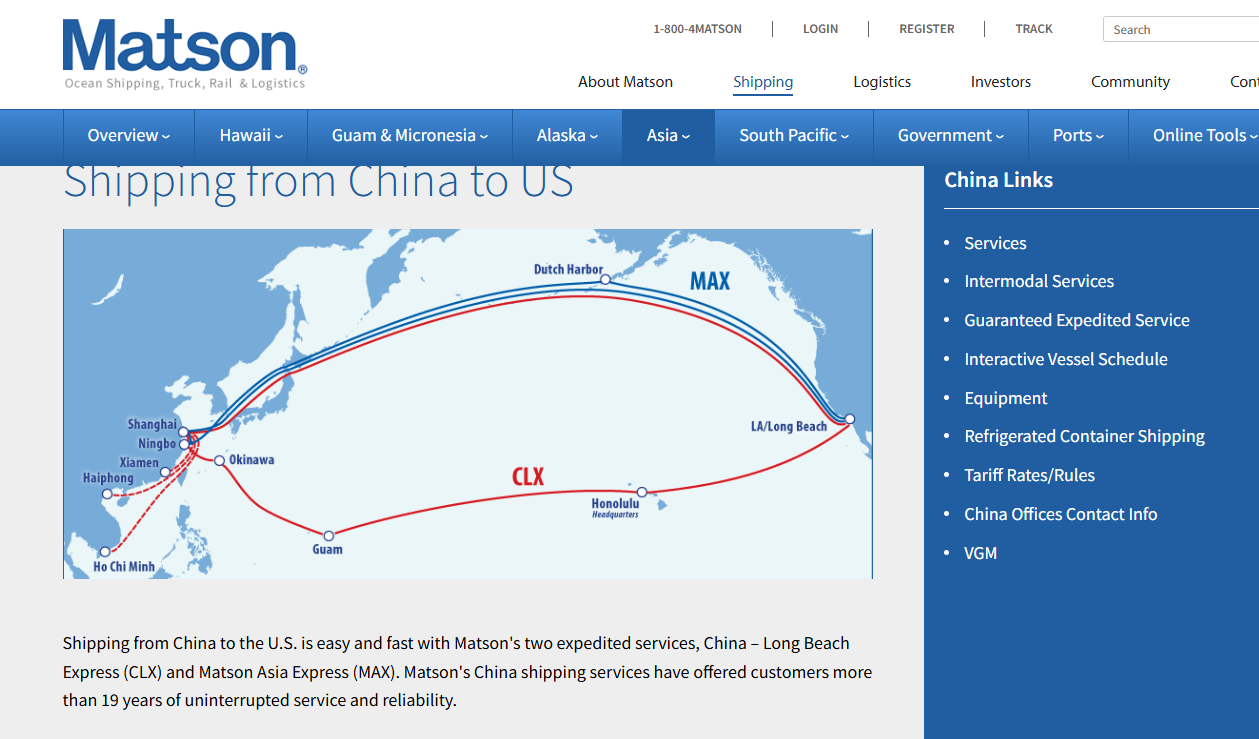
| Matson CLX (battery-eligible) | Yantian | Long Beach | 18–22 days (port-to-port 10–14) | When carrier accepts the DG booking |
Note: Matson CLX can be considered for eligible US West Coast ocean cargo only when the planned routing and acceptance conditions fit the shipment — it is not a substitute for battery-document review.
Step 6: Amazon FBA Hazmat Review — Passing the First Time
When you create a battery product listing, Amazon puts it under “Hazmat Review.” To pass quickly:
- Navigate to Manage Dangerous Goods Classification in Seller Central
- Upload the SDS (dated within last 5 years) — must match your product listing exactly
- Upload the Battery Exemption Sheet (for UN3481 products like headphones, Bluetooth speakers)
- Upload the UN38.3 Test Summary (mandatory since 2020)
- Answer the three battery questions accurately:
- Is the product itself a battery? (e.g., power bank)
- Does the product require a battery? (e.g., electric toothbrush)
- Does the product ship with standalone batteries? (e.g., camera + spare battery)
⚠️ Consequence of incomplete/conflicting info: Amazon will block your product from FBA sales until resolved .
Step 7: Common Failure Points — And How to Avoid Them
Based on 2026 operational data:
❌ Failure 1: UN38.3 model mismatch — The battery model in the report doesn’t match the physical shipment → vessel refusal
✅ Fix: Verify model numbers character-by-character before submitting booking docs
❌ Failure 2: SoC > 30% for air shipments → direct rejection
✅ Fix: Discharge batteries to ≤30% state of charge before factory stuffing
❌ Failure 3: Reusing one transport identification report for multiple modes → terminal seizure
✅ Fix: Obtain separate sea and air identification reports; they are NOT interchangeable
❌ Failure 4: Missing 24/7 emergency phone number on lithium battery mark → Amazon FBA rejection
✅ Fix: Print the emergency number in fonts clearly readable at 2 meters
❌ Failure 5: Booking standalone UN3480 via Amazon Global Logistics → policy violation
✅ Fix: Use a third-party DG-certified forwarder with DDP terms, OR restructure as UN3481 (battery contained in equipment)
Step 8: Port Selection for Battery Cargo
Not all ports treat DG cargo equally:
🔹 Yantian (Shenzhen) — DG-enabled terminals accept Class 9 lithium batteries. The new “inspection at origin” model makes it the most streamlined option for GBA-sourced battery cargo
🔹 Ningbo-Zhoushan — Wide acceptance, consistent enforcement; mandatory SDS + UN38.3 since 2025
🔹 Shanghai (Yangshan) — High DG volume but strict direct-loading windows for many hazard classes; lithium battery cargo faces fixed carrier quotas per sailing that fill quickly
🔹 Avoid: Smaller ports without DG-certified terminals — your container can be turned away kilometers from booking
Bottom Line: Compliance Is the Competitive Advantage
In battery and hazmat FBA shipping, the winners aren’t the fastest — they’re the most meticulous. A single mismatched document can cost you:
- Vessel refusal: +$2,000–5,000 in penalty fees
- Cargo return to factory: +15–25 days delay
- Amazon FBA rejection: +$3,000+ in return logistics + relabeling
- Lost sales velocity: incalculable
The 2026 Yantian “one-container” model proves that when your paperwork is perfect, your battery cargo moves as smoothly as standard FBA goods. The key is treating compliance as a front-loaded process, not a day-of problem.
Shipping battery-powered products to Amazon FBA from China?
Our DG-certified team provides end-to-end compliance: UN38.3/SDS document pre-check, DG packaging sourcing, carrier booking with verified DG quotas, Yantian direct-loading coordination, and FBA appointment alignment. Contact us to engineer a rejection-proof battery shipping plan.
← Prev: Yantian Express Ship for Amazon FBA: The Definitive 2026 Guide
How to Choose a Freight Forwarder in China: A Strategic Guide for Global Shippers
Selecting the right freight forwarder is one of the most critical decisions for importers and…

de minimis elimination 2026 china imports fba
For years, cross-border e-commerce ran on a simple, powerful premise: shipments valued at $800 or…

Tariff Engineering: How to Legally Cut Your US Import Duty Bill in 2026
By now in this series, you understand the compliance chain: Amazon FBA forces DDP terms,…