
Here’s an uncomfortable truth for Amazon sellers sourcing from China: peak season 2026 didn’t start in September. It started in late May.
Driven by North American pre-holiday stocking, the 2026 FIFA World Cup retail buildup, and front-loading ahead of tariff deadline changes, the trans-Pacific ocean freight market entered peak season two months earlier than usual. By early August, spot rates from Shanghai to Los Angeles had climbed to $6,229 per 40ft container, with carriers projecting pushes toward $7,250 in the coming weeks. The U.S. East Coast market is even tighter — rates are expected to break $10,000 per FEU.
If you’re reading this in mid-to-late August and haven’t booked your Q4 ocean freight yet, you are already behind. This playbook tells you exactly what to do — this week, not next month.
The 2026 Peak Season Is Structurally Different
Three forces are converging to make this the most challenging Q4 in recent years:
1. Early capacity crunch with no relief in sight
Since late May, cargo volumes on China-US routes have far outpaced vessel capacity. Rollover rates (cargo delayed to subsequent sailings) have reached 30-60%, with 90% of sailings fully booked or overbooked. Carriers have implemented blank sailings — seven blanked in late May alone, removing an estimated 12% of capacity.
2. Stacking surcharges
Carriers aren’t just raising base rates — they’re layering surcharges:
- Maersk PSS: $1,000/20ft, $2,000/40ft & 45ft (effective June 17, 2026)
- ONE PSS: $2,000/FEU (effective June 1, 2026)
- MSC Emergency Fuel Surcharge: +$540/40ft box (US West Coast)
- COSCO PSS (June 15-30): $1,600/20GP, $2,000/40GP & 40HQ, $2,532/45HQ
- July 1 GRI: Up to $2,400/20ft, $3,000/40ft, $3,375/40HQ, $3,798/45ft
A Peak Season Surcharge alone commonly runs $500-$1,500 per container, and when GRI, PSS, and equipment imbalance fees stack, a seller who books late can finish Q4 roughly 15-40% over their freight budget.
3. Amazon’s hard deadline structure
Amazon’s Q4 2026 readiness manual sets immovable arrival deadlines:
| Event | AWD Shipments Arrive By | FBA “Minimal Split” Arrive By | FBA “Amazon-Optimized Split” Arrive By |
|---|---|---|---|
| Prime Big Deal Days | September 2, 2026 | September 9, 2026 | September 16, 2026 |
| Black Friday Week & Cyber Monday | October 14, 2026 | October 21, 2026 | October 28, 2026 |
⚠️ Amazon explicitly warns: “Inbound delivery window slots will be limited, and you may see lower estimated capacity limits for October and November.” Starting in November, fulfillment centers shift focus from receiving to order processing — meaning late-October arrivals may not be received in time for Black Friday.
Plus, holiday peak fulfillment fees apply from October 15, 2026, to January 14, 2027 — with the fuel and logistics surcharge now stacked on top.
The Hidden Risk: Red Sea Rerouting Is Squeezing ALL Trade Lanes
Even if you’re shipping to the US West Coast (which doesn’t use Suez), you feel the pinch. Here’s why: when each Asia-Europe round trip takes 10-14 days longer via the Cape of Good Hope, carriers need more ships to maintain schedules. This pulls vessels away from other routes.
In 2026, an estimated 5-7% of the global container fleet — about 1.3-1.8 million TEU of capacity — is tied up in the longer Cape route. The fallout hits every lane:
- Asia → US East Coast (via Suez): +15-25% cost, +8-12 days
- Asia → Mediterranean: +30-45% cost, +10-14 days
- Asia → US West Coast: +5-10% cost, 0-2 days (capacity spillover effect)
Translation: Even Pacific routes that never touch the Red Sea face tighter space and higher rates because carriers have shifted vessels to cover the Asia-Europe gap.
Your 2026 Peak Season Calendar — Reverse-Engineered
Working backward from Amazon’s hard deadlines and the China Golden Week shutdown (October 1-7, when factories and logistics essentially stop for ~2 weeks), here is your action calendar:
🔴 NOW — August 19 to August 31: THE LAST CLEAN WINDOW
This is it. The final opportunity to ship via ocean and reliably hit Amazon’s Prime Big Deal Days deadlines.
✅ Actions this week:
- Finalize your Q4 forecast — multiply normal monthly sales by 2-3x for Q4 SKUs
- Lock ocean bookings NOW — secure space and rate before September PSS stacking
- Confirm production timelines with suppliers; ensure goods can be stuffed by August 25
- Create Amazon shipment IDs — before vessel departure, not after
- Apply FNSKU labels at factory/supplier warehouse before CFS consolidation
- Calculate 30-60 days of inventory cover for each SKU (Amazon’s official recommendation)
💡 Critical insight: Amazon’s official guidance states sellers maintaining good inventory levels (targeting at least 28 days of stock) see 15-20% higher sales. For Q4, extend this to 30-60 days of cover.
🟡 September 1-20: The “Golden Week” Race
- Mid-September is the critical pre-holiday ocean window — book and ship the bulk of holiday inventory by sea
- September 15 is your soft deadline for goods that must be sellable by October 1
- After September 20: Mid-Autumn Festival (late September) + Golden Week (Oct 1-7) create a ~2 week hard stop
- Nothing time-critical should still be waiting to ship when Golden Week hits
Reality check: A container leaving China on September 25 (if you can even find space) won’t clear US customs and FBA receiving until mid-to-late October — missing Prime Big Deal Days entirely.
🟠 September 20 – October 7: Golden Week Shutdown
- Factories close; trucks stop; CFS operations freeze
- Anything not on the water by September 20 is stuck until October 8+
- This is the hard stop, not a slowdown
🟢 October 8-31: Air Freight & Express Only
- Ocean bookings made now arrive in mid-to-late November — too late for Black Friday
- Only air freight (5-10 days) or express courier (2-5 days) can save you
- Budget accordingly: air freight jumps to $8-14/kg (50-100% increase over off-season)
🔵 November-December: Emergency Mode
- Ocean freight effectively cannot make Christmas (unless it left by early October)
- US domestic replenishment from 3PL/overseas warehouses
- Amazon fulfillment centers prioritize order processing over receiving
The Rate Reality: What You’ll Actually Pay
Based on August 2026 market data:
| Lane | Off-Season (Jan-April) | Peak Season (Aug-Dec) | Increase |
|---|---|---|---|
| Shanghai → LA/LB (40ft) | $2,500-3,500 | $6,229+ (heading to $7,250) | +100-130% |
| Shanghai → NY (40ft) | $4,000-5,000 | $10,000+ (heading to $10,500) | +100-125% |
| LCL (per CBM) | $100-200 | $150-300 | +30-50% |
| Air freight (per kg) | $5-7 | $8-14 | +50-100% |
| Express courier (per kg) | $8-12 | $12-20 | +50-70% |
Data from Drewry WCI, SCFI, and carrier announcements, August 2026
The math is brutal: A seller who locks ocean space in late August at ~$5,000/FEU for a 40ft container will pay $2,000-2,500 more per container than if they’d booked in July — and risks 30-60% rollover rates if they wait for September sailings.
The 5-Part Playbook: How to Win Q4 2026
📦 Strategy 1: Split Your Inventory — The 70/20/10 Rule
Don’t put all your eggs in the ocean freight basket:
- 70% via ocean LCL/FCL — booked NOW, arriving by mid-September
- 20% in AWD or US 3PL buffer — pre-positioned inventory for auto-replenishment or emergency drayage
- 10% reserved for air freight — emergency top-ups for proven bestsellers only
This structure protects against both stockouts AND overstock storage fees.
🚢 Strategy 2: Prioritize Your Routing Mix
For US West Coast FBA (ONT8, LGB8, etc.):
- Yantian Express (Matson CLX/ZIM/OOCL PVCS): Still your best bet for speed, but space is 90%+ booked — lock immediately
- Standard Trans-Pacific: 18-25 days port-to-port; must depart by September 10 to make Prime Big Deal Days
- AWD routing: Ship to Shenzhen GWD or US AWD before September 2 for Prime; before October 14 for Black Friday
For US East Coast FBA:
- Trans-Pacific + rail: Must depart by August 25 (rail adds 10-14 days)
- Alternative: Consider diverting to US West Coast FBA and using Amazon’s cross-country distribution
For Europe FBA:
- Asia-Europe via Cape of Good Hope: +10-14 days over pre-crisis; depart by August 20 to make October deadlines
- Budget for war-risk premiums (now ~1.0% of cargo value vs. 0.07% pre-crisis)
📋 Strategy 3: Documentation Perfection (Non-Negotiable)
With customs scrutiny tightening in 2026 (de minimis eliminated for all countries), your paperwork must be flawless:
- ✅ ISF (10+2) filed 24 hours before vessel departure — late filing = container held or fined
- ✅ Accurate HS codes — vague descriptions trigger exams adding 7-10 days
- ✅ FNSKU labels applied before CFS consolidation
- ✅ Commercial invoices detailed — “electronics accessory” gets flagged; “Bluetooth earbuds Model XT-200, HS 8518.30” passes
- ✅ Amazon shipment ID created before vessel departure (not after arrival)
💰 Strategy 4: Lock Rates Early with Multiple Forwarders
Never rely on a single forwarder during peak. In 2026:
- Request all-in DDP quotes with rate validity of 10-14 days
- Book 2-3 weeks ahead — industry experts confirm that securing ocean bookings at least 3 weeks in advance dramatically improves odds of getting space and equipment
- Consider contract rates (SPOT bookings) for guaranteed space allocation
- Have a backup forwarder with air freight capability for emergencies
📊 Strategy 5: Monitor and Adapt Weekly
Peak season is not “set and forget”:
- Track vessel schedules via MarineTraffic or carrier portals
- Monitor rollover rates — if your forwarder reports >30% rollover on your lane, escalate immediately
- Watch Amazon FBA receiving dashboard daily after arrival
- Set replenishment triggers at 30 days of cover (not 10)
- Build 2-3 weeks of buffer beyond Amazon’s stated transit times
The AWD Advantage: Your Secret Weapon for Q4 2026
Amazon’s Warehousing & Distribution (AWD) is arguably the most powerful tool for this peak season:
✅ AWD shipments have earlier Amazon deadlines (Sept 2 for Prime, Oct 14 for Black Friday) — buying you extra time
✅ No holiday storage surcharges — protects against Q4 storage fee spikes
✅ Auto-replenishment keeps FBA inventory level without manual intervention
✅ Lower storage rates ($0.48/cu ft/month vs. FBA’s premium rates)
✅ Absorbs the receiving bottleneck — Amazon processes AWD inventory internally, bypassing FBA inbound appointment constraints
The play: Ship your Q4 bulk inventory to AWD (US or Shenzhen GWD) by the respective deadlines. Let Amazon handle the distribution to FBA. Your inventory arrives at the fulfillment center automatically — even during the November-December receiving slowdown.
⚠️ Reminder: AWD accepts ONLY sortable inventory post-July 31, 2026 (under 18×14×8 inches, 20 lbs). Audit your SKU dimensions now.
The 5 Deadly Sins That Will Cost You Q4
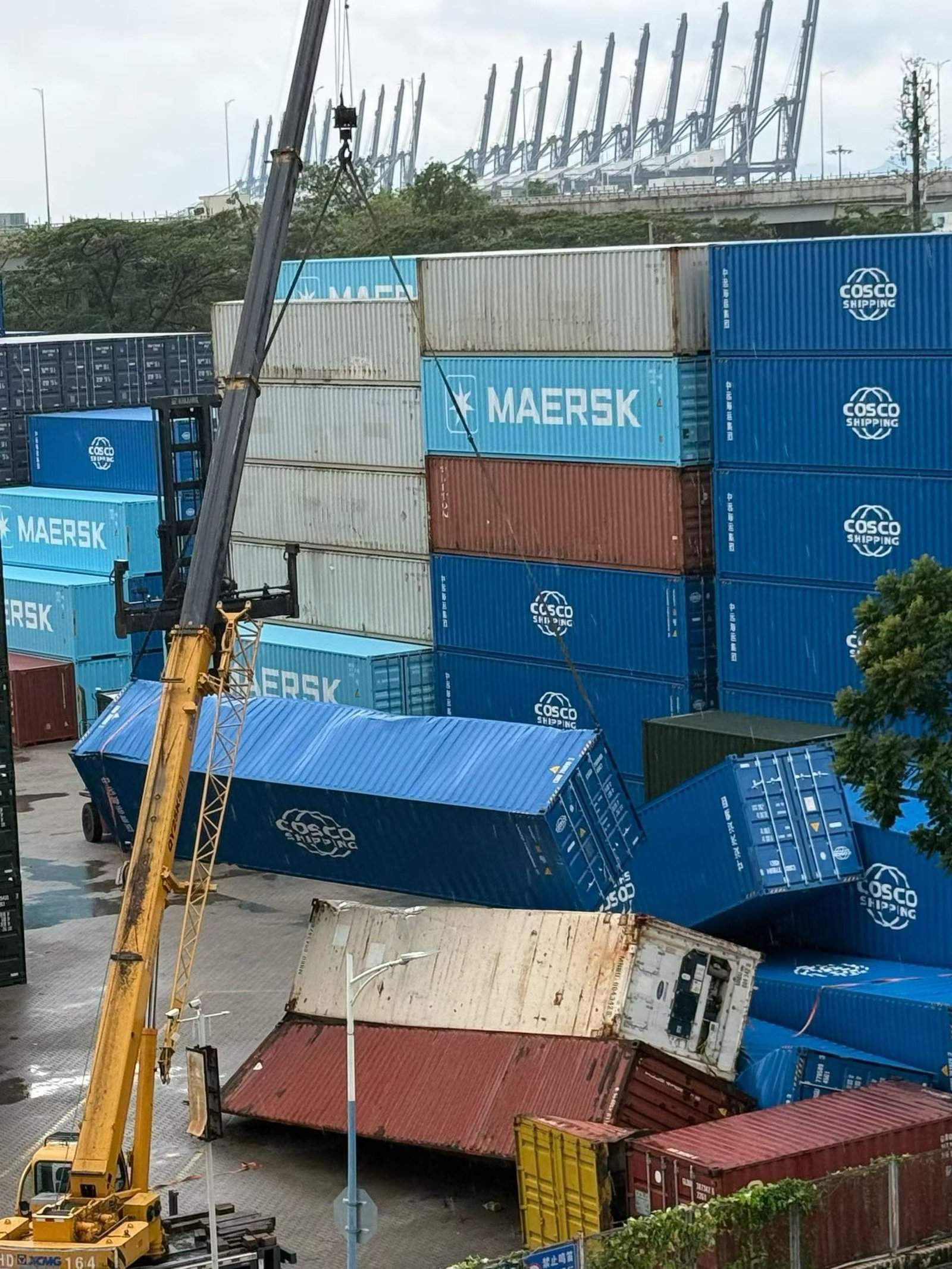
❌ Sin 1: Waiting for September
Result: 30-60% rollover rates, +$2,000-3,000/container in stacked surcharges, missed Prime Big Deal Days.
❌ Sin 2: Incomplete FNSKU labeling at CFS
Result: Cargo can’t be stuffed; container departs without your goods; 7+ day delay minimum.
❌ Sin 3: Missing Golden Week cut-off
Result: Goods stuck in China until October 8+; arrive mid-November; miss Black Friday entirely.
❌ Sin 4: Single forwarder dependency
Result: When they can’t get space, you have no fallback. 40% of peak-season stockouts trace to forwarder capacity failures.
❌ Sin 5: Ignoring AWD eligibility changes
Result: Oversized items rejected at AWD after July 31; forced into expensive direct FBA shipping with tighter deadlines.
(H2) Your Immediate Action List (This Week)
If you do nothing else, do these 5 things in the next 7 days:
- ✅ Audit your Q4 forecast — identify top 20% SKUs by revenue
- ✅ Lock ocean bookings for August 25-31 sailings (last clean window)
- ✅ Create Amazon shipment IDs for all Q4 inventory
- ✅ Confirm supplier production can meet August 25 stuffing deadline
- ✅ Reserve AWD space — ship your buffer inventory to Amazon’s warehouse before September 2
Bottom Line: The Clock Has Already Ticked Past “Early”
In previous years, “start planning in September” was acceptable advice. In 2026, that guidance is dangerously outdated. The market voted in May. Rates surged in June. Capacity tightened in July. And now, in mid-August, you’re in the final stretch.
Sellers who win Q4 2026 will share three traits:
- They booked ocean space in July or August — not September
- They built AWD buffers — not just direct FBA shipments
- They planned for 30-60 days of cover — not 10-15
The good news? You’re reading this on August 19. You still have time. The next 10 days are your last clean window to ship via ocean and reliably hit Amazon’s Prime Big Deal Days deadlines. After that, your only options are expensive air freight or a January arrival.
Ready to lock your Q4 2026 ocean space before rates climb higher?
Our team provides: real-time trans-Pacific capacity reports, all-in DDP quotes with 14-day rate validity, AWD shipment coordination, FNSKU pre-labeling partnerships, and weekly vessel tracking. We’ve already secured space for dozens of sellers on August 25-31 sailings. Contact us today to claim your spot before the next GRI hits.
Amazon AWD + LCL — Building a Hands-Free Replenishment Engine

How to Choose a Freight Forwarder in China: A Strategic Guide for Global Shippers
Selecting the right freight forwarder is one of the most critical decisions for importers and…
de minimis elimination 2026 china imports fba
For years, cross-border e-commerce ran on a simple, powerful premise: shipments valued at $800 or…

Tariff Engineering: How to Legally Cut Your US Import Duty Bill in 2026
By now in this series, you understand the compliance chain: Amazon FBA forces DDP terms,…