
Below is a deeper look at what Haul is, how it works, why Amazon is doing it now, and what it means for sellers and shoppers.
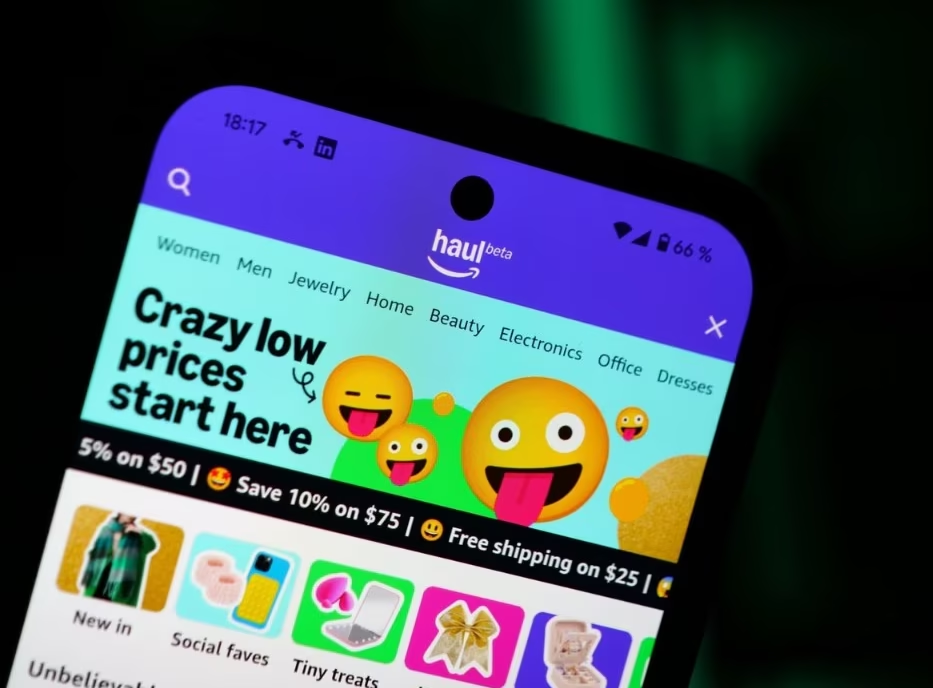
- Amazon has launched “Amazon Haul,” a dedicated, mobile-first storefront inside the Amazon app focused on ultra-low‑priced items (mostly under $10, almost everything under$20).
- It’s explicitly designed to take on budget marketplaces like Temu and Shein by combining Amazon’s logistics and trust with rock‑bottom prices.
- Shipping is slower and more selective than standard Prime: free delivery on orders over $25, otherwise a shipping fee applies, and items generally aren’t returnable below$3.
- For sellers, Haul is both an opportunity (new low‑price channel, Amazon‑handled logistics) and a warning (even Amazon feels it must compete on ultra‑cheap fashion and home goods).
1. What Is Amazon Haul?
1.1 Basic definition
Amazon Haul is:
- A dedicated “storefront” or section inside the Amazon app (mobile‑first experience).
- Focused on everyday, low‑ticket items: fashion, home goods, beauty, accessories, some electronics, and general “lifestyle” products
- Built around a hard price cap: items are $20 or less, with many items under$10 and some as low as about $1.
- Branded as “ultra‑low” prices: Amazon itself uses terms like “ultra‑low” prices and “unbelievable finds” in customer‑facing copy.
You can think of Haul as Amazon’s answer to the endless scroll of cheap goods you see on Temu/Shein—but wrapped in Amazon’s account system, reviews, and fulfillment network.
1.2 How customers access it
- Inside the Amazon mobile app, there is an “Amazon Haul” entry/section (similar in concept to Special Offers or Amazon Outlet).
- It is designed as a discovery destination: curated categories, banners, “deals under $10,”
- As of launch, it is U.S.-focused; Amazon has signaled plans to expand the low‑cost concept globally, under names like Haul and “Bazaar” in other markets.
2. How Amazon Haul Works: Key Mechanics
2.1 Price caps and item mix
- Price range: Most products are under $10; the overall cap is$20.
- Typical categories:
- Apparel & accessories
- Home & kitchen basics
- Beauty & personal care
- Small electronics & accessories
- Seasonal decor, toys,
These are product types that historically sell well on Temu and Shein: trend‑driven, low absolute price, and often impulse buys.
2.2 Shipping and returns policy
This is one of the biggest differences vs. classic Prime:
- Shipping speed: Items in Haul are not standard Prime two‑day. They typically take 1–2 weeks to arrive, more like standard budget e‑commerce shipping than Prime.
- Free shipping threshold:
- Free delivery on orders over $25.
- Otherwise, a shipping fee applies (reports mention around $3.99 per order).
- Returns:
- Items under $3 are generally not eligible for return; Amazon explicitly says purchases under$3 cannot be returned.
- For $3+ items, normal Amazon return policies apply, but return windows and options may vary.
This structure keeps Amazon’s per‑unit cost down, which is necessary to hit ultra‑low price points while still making a margin.
2.3 Logistics and fulfillment
- Amazon is using its existing fulfillment and logistics infrastructure, but with different economics (slower/cheaper shipping methods, consolidation, etc.).
- Haul is part of Amazon’s broader low‑cost push: the company is expanding low‑cost shopping services globally, including Haul and related concepts, specifically to pressure Chinese low‑price rivals.
- For sellers, that means Amazon may handle fulfillment for many Haul items (similar in spirit to FBA, but tuned for low‑margin goods), though program specifics for sellers are still evolving.

3. Why Now? The Temu / Shein Threat
Amazon’s timing is not accidental. It’s a direct response to rapid growth from Temu, Shein, and similar platforms:
- Temu and Shein have attracted millions of U.S. shoppers with extremely cheap fashion, home goods, and gadgets, often shipped from China with long transit times but unbeatable prices.
- Recent surveys indicate that while many Americans have still never tried Amazon Haul, Temu and Shein have already reached significant adoption in younger and price‑sensitive segments.
- Tariffs and trade tensions also matter: Amazon is expanding Haul and other low‑cost offerings as tariffs squeeze Chinese rivals, using its logistics and U.S. presence as a competitive edge.
By launching Haul, Amazon is essentially saying:
- “We can do ultra‑cheap too, but with U.S.‑based trust, predictable logistics, and integrated Prime/Amazon account benefits.”
4. Amazon Haul vs. Temu / Shein: A Quick Comparison
Here’s a high‑level comparison:
| Dimension | Amazon Haul | Temu / Shein |
|---|---|---|
| Typical prices | Mostly <$10, max ~$20 | Often <$10, many items a few dollars |
| Shipping speed | ~1–2 weeks (non‑Prime) | Often 1–3 weeks from China |
| Free shipping | Orders over $25 | Often free shipping with minimums, or on many orders |
| Returns | <$3 generally not return | Varies; often limited or expensive return options |
| Platform trust | Amazon account, reviews, A‑to‑z claims | Improving, but trust and customer service perception lag Amazon |
| Seller ecosystem | Integrated into Amazon; likely strong quality/compliance gating | Mix of large and small China sellers; variable quality |
Amazon’s bet: price is necessary but not sufficient—trust, brand, and reliable logistics matter even for low‑ticket items.
5. How This Impacts Sellers
If you’re a seller (especially one already on Amazon or considering entering), Amazon Haul matters in several ways:
5.1 Opportunities
- New low‑price channel:
- You can offer ultra‑low‑price SKUs without cannibalizing your main “Prime” brand image.
- Haul is built for “opening price point” and discovery products.
- Amazon‑managed logistics:
- If Amazon handles fulfillment for Haul items, you can tap their logistics while still selling at rock‑bottom prices (though your margins will be thin).
- Exposure to price‑sensitive Prime customers:
- You reach Amazon shoppers who are curious about Temu/Shein but prefer staying within Amazon’s ecosystem.
5.2 Risks and Challenges
- Even lower margins:
- Selling under $10, especially after Amazon’s cut and shipping costs, means very tight unit economics.
- You’ll need scale and high inventory turnover to make it work.
- Quality and reviews:
- Temu/Shein buyers are used to mixed quality; Amazon customers still expect consistent quality and decent reviews. A few bad batches can hurt your broader Amazon brand.
- Program dependency:
- If Haul becomes a “walled garden” with special rules, you may be forced into certain pricing, return, or performance constraints to participate.
5.3 Strategic questions for sellers
- Do you have low‑cost SKUs that can realistically be priced under $10–$20 and still carry a margin after fees?
- Can you source and ship in volume to make the low‑margin, high‑volume model work?
- Is being in Haul consistent with your brand, or do you want a separate “budget line” identity?
- How do you protect your main listings from internal cannibalization if you offer similar items cheaper in Haul?
6. What This Means for Shoppers
For consumers, Amazon Haul is a double‑edged sword:
6.1 Upsides
- Access to ultra‑cheap items without leaving Amazon.
- Integrated checkout, Prime account, and customer service (even if shipping is slower).
- Potentially better predictability on delivery and returns compared to some cross‑border platforms.
6.2 Downsides / Gotchas
- Shipping is not Prime‑fast; expect 1–2 weeks.
- Free shipping requires hitting a $25 threshold; otherwise you pay a shipping fee.
- Very cheap items (under $3) generally can’t be returned, so “try it and see” carries real risk.
- As with any ultra‑cheap marketplace, quality will vary and you still need to read reviews and check seller ratings.
7. The Bigger Picture: Amazon’s Long‑Term Low-Price Play
Amazon Haul is not an isolated experiment; it’s part of a broader shift:
- Amazon is rolling out low‑cost shopping services and storefronts (Haul, Bazaar, etc.) across markets, all targeting the “under $20” segment.
- This happens at the same time as:
- Tariffs and regulatory pressure on Chinese ultra‑cheap platforms.
- Growing consumer appetite for bargains and “fast fashion” trends.
- Amazon is combining:
- Its logistics edge
- Its data and recommendation engine
- Its trusted brand
With Temu/Shein‑like price points.
In other words: Amazon is trying to “Temu‑proof” its customer base by offering Temu‑like prices inside an Amazon‑like experience.
8. Practical Takeaways
- For shoppers: Amazon Haul is a new place to hunt for bargains under $20, but remember:
- Shipping is slower and only free over $25.
- Sub‑$3 items are generally non‑returnable.
- It’s still Amazon: reviews matter, and seller quality varies.
- For sellers:
- Treat Haul as a distinct low‑price/margin channel, not an extension of your main Prime business.
- Decide whether you want a separate budget brand or house‑brand for Haul.
- Prepare for volume, thin margins, and strict performance/quality expectations.
- For the industry:
- Amazon’s move confirms that ultra‑low price points are now a core segment, not a niche.
- The battleground will be: who can deliver “cheap but good enough” products at scale while maintaining trust and logistics reliability.
Bottom Line
Amazon Haul is a clear, strategic shot at Temu and Shein: same price universe, but wrapped in Amazon’s logistics, brand, and account ecosystem. It’s still early days for the program, but the direction is clear—Amazon is not ceding the ultra‑cheap space to anyone, and it’s willing to change the rules (slower shipping, different return policies) to do so.
For sellers, the question isn’t “if” ultra‑cheap matters—it’s “how” you participate without destroying your margins or your brand. For shoppers, it’s a new way to chase bargains without leaving Amazon, as long as you’re comfortable with longer shipping and limited returns on the cheapest items.
Temu vs. Shein: Which App is Safer
By langxu freight | Updated: 2026 The battle for the top spot in the ultra-fast…
Mastering the Ocean Bill of Lading
In the fast-paced world of international logistics, cargo moves across oceans, but paperwork rules the…

e-commerce How to Secure Your Supply Chain and Amplify Your Brand
Your shop is growing. The adrenaline of the first few sales has settled into a…