For decades, international logistics focused almost exclusively on China’s coastline. But today, the real growth is happening 1,500 km inland. Welcome to Chongqing and Chengdu—the twin engines of Western China and the undisputed kings of the China-Europe Railway Express.
If your suppliers are located in Sichuan or Chongqing, you don’t need to truck your goods to Shanghai or Shenzhen. Through a sophisticated network of railways and the Yangtze River, these cities function as “inland ports,” offering direct access to Europe, Central Asia, and Southeast Asia.
This guide explains how we turn “landlocked” into “land-linked” for your supply chain.
The Game Changer: China-Europe Railway Express (CR Express)
Often referred to simply as the “Iron Silk Road,” the CR Express is a scheduled block train service connecting China directly to Europe. Chongqing and Chengdu are the busiest origins on this network.
Why Choose Rail over Sea?
- Speed: Roughly 12–18 days to major European hubs (Duisburg, Hamburg, Warsaw). This is 50% faster than ocean freight (30–40 days).
- Cost: Approximately 30–40% cheaper than air freight.
- Reliability: Fixed schedules immune to typhoons, port congestion, or Red Sea diversions.
- Capacity: Ideal for cargo that is too heavy or bulky for air, but too urgent for sea.
Chongqing: The Automotive & Electronics Powerhouse
Chongqing is a megacity built on mountains and industry. It is the home of Ford’s China operations and a major manufacturing base for HP and Foxconn.
- The Chongqing-Xinjiang-Europe Route: This was one of the first CR Express lines. It runs westward through Kazakhstan, Russia, Belarus, and Poland before reaching Germany.
- New International Land-Sea Corridor (ILSTC): Chongqing is also the starting point for a southward rail-sea route. Goods travel by train to Qinzhou Port (Guangxi), then by sea to Singapore and the rest of ASEAN. This is vital for businesses trading between Western China and Southeast Asia.
- Industrial Focus: Laptops, monitors, automotive parts, and motorcycles.
Chengdu: The Gateway to Western China
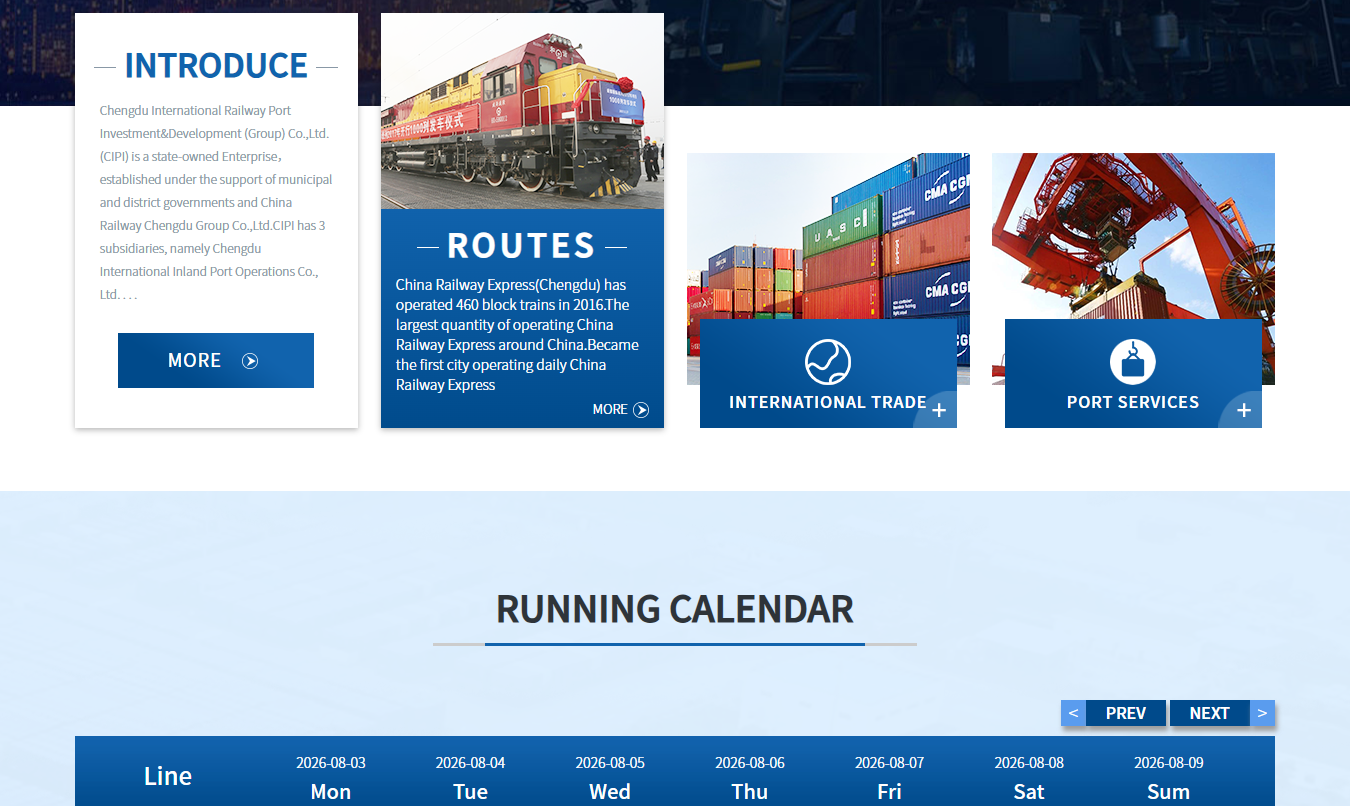
Chengdu, the capital of Sichuan Province, is known for its high quality of life and booming aerospace and consumer electronics sectors.
- The Chengdu-Europe Express: Competing neck-and-neck with Chongqing, Chengdu offers frequent departures to Lodz (Poland), Nuremberg (Germany), and Tilburg (Netherlands).
- The “Yu-Xin-Europe” Connection: While Chongqing focuses on the northern routes, Chengdu has developed robust connections to Southern Europe via Turkey and the Black Sea.
- Industrial Focus: Intel chipsets, BOE screens, aviation parts, and high-end furniture.
The River Option: Yangtze River Golden Waterway
Not everything needs to go by rail. Both Chongqing and Chengdu benefit from the Yangtze River’s upstream navigation.
- River-Rail Intermodal: Containers can be stuffed in Chengdu, trucked or railed to Chongqing’s Guoyuan Port, and loaded onto 1000-TEU river vessels.
- Coastal Connection: These vessels travel down the Yangtze River for 7–10 days to reach Shanghai or Ningbo.
- Strategic Advantage: For non-urgent, heavy, or bulky cargo (stone, chemicals, machinery), this “river-sea” combo offers the lowest possible freight cost in China.
Inland Customs Clearance: The “Seamless” Experience
- One of the biggest fears for overseas buyers is the complexity of inland logistics. Our service eliminates this friction:
- Inland Consolidation: We pick up your goods from factories in Sichuan, stuff them into containers at our Bonded Logistics Parks (BLP) in Chengdu or Chongqing, and seal them under customs supervision.
- Direct Loading: Once cleared inland, the container moves directly to the railway station or river port. There is no need to open the container again at the coastal port.
- Door-to-Port Visibility: You get a single Bill of Lading covering the entire journey from the factory floor in Chengdu to the port of Rotterdam or Los Angeles.
When Should You Use Inland Ports?
✅ Choose INLAND RAIL (Chongqing/Chengdu) if:
- Your suppliers are in Sichuan, Chongqing, or Shaanxi.
- You are shipping high-value electronics or automotive parts.
- Your transit time requirement is under 20 days (too slow for sea, too expensive for air).
- You want to avoid the congestion and delays of coastal ports like Shanghai or Ningbo.
✅ Choose RIVER-SEA (Yangtze) if:
- You are shipping heavy, dense, or non-urgent cargo (e.g., stone, tiles, metals, bulk chemicals).
- Cost minimization is your absolute priority.
- You are already utilizing the Yangtze River Delta logistics network.
Conclusion: The Future is Inland
The era of coastal-centric logistics is ending. With the maturity of the China-Europe Railway Express and the efficiency of the Yangtze River, Chongqing and Chengdu offer a viable, often superior, alternative to traditional coastal shipping.
By leveraging our inland network, you gain access to the vast manufacturing capabilities of Western China without the logistical nightmares. Whether by rail to Europe or river to the sea, we ensure your cargo moves smoothly from the heart of China to the heart of your market.
Sourcing from Sichuan or Chongqing?
Don’t let geography dictate your logistics. Contact us today to explore the fastest and most cost-effective inland-to-global shipping solutions.
Read our guide: Shanghai Port – The World’s Busiest Gateway
How to Choose a Freight Forwarder in China: A Strategic Guide for Global Shippers
Selecting the right freight forwarder is one of the most critical decisions for importers and…
de minimis elimination 2026 china imports fba
For years, cross-border e-commerce ran on a simple, powerful premise: shipments valued at $800 or…

Tariff Engineering: How to Legally Cut Your US Import Duty Bill in 2026
By now in this series, you understand the compliance chain: Amazon FBA forces DDP terms,…