Qingdao Port: North China’s Hub for Cold Chain, Heavy Industry, and Intra-Asia Trade
While Shanghai handles retail, Ningbo manages bulk, and Shenzhen powers the electronics boom, Qingdao Port plays a pivotal role in a different sector of the global economy: cold chain logistics, heavy machinery, and the bustling short-sea trade with Korea and Japan.
Located in Shandong Province—often called “China’s second-largest economy by province”—Qingdao is the anchor of North China. It boasts the largest cold chain logistics base in China and serves as the primary export gateway for everything from tires and auto parts to frozen seafood and fresh fruit.
This guide explains why Qingdao is the non-negotiable choice for shippers dealing with temperature-sensitive cargo and the robust manufacturing base of the North.
The Cold Chain Capital: More Than Just Fish
If your business involves perishables, Qingdao is where China’s logistics excellence shines brightest. The port features a massive International Logistics Park dedicated to cold storage.
- Reefer Capacity: Qingdao offers tens of thousands of reefer plug points. It is the leading port in China for the import of frozen seafood (prawns, pollock, cod) and meat.
- Fruit Import Gateway: Thanks to numerous “Green Channel” protocols, Qingdao is often the fastest port for clearing fresh fruits from Southeast Asia and the Southern Hemisphere.
- Bonded Freezing: The Qingdao Free Trade Zone allows for long-term bonded storage of frozen goods, enabling traders to manage inventory based on market prices rather than vessel schedules.
💡 Pro Tip: If you are importing frozen goods into China, always check if the shipment is routed via Qingdao. The efficiency of its cold chain inspection process can save you days compared to other North China ports.
The Korean & Japanese Connection
Geography is destiny. Qingdao is strategically positioned on the Yellow Sea, providing the shortest sea distances to Incheon (Korea) and Osaka/Kobe (Japan).
- Short-Sea Mastery: There are multiple daily sailings (sometimes hourly) connecting Qingdao to major Korean and Japanese ports. Transit times can be as short as 24 to 48 hours.
- The “Korean Detour”: Many shipments originating in Central China (Shanghai/Ningbo) are actually trucked to Qingdao to catch a faster, cheaper feeder to Korea than waiting for a direct slot from the congested Yangtze River Delta.
- Cosmoport: Qingdao is also a major hub for Ro-Ro (Roll-on/Roll-off) cargo and cruise ships, facilitating the movement of vehicles and high-end components between the three Northeast Asian economic powerhouses.
Industrial Might: Tires, Autos, and Heavy Equipment
Shandong Province is the heartland of China’s heavy industry.
- Tires: Shandong produces a massive percentage of the world’s tires. Qingdao is the primary export point for major brands (both OEM and aftermarket).
- Automotive Parts: The surrounding cities (Weifang, Yantai, Jinan) host massive auto parts clusters. Qingdao handles the heavy lift of exporting engines, chassis, and assemblies.
- Machinery: From construction equipment to agricultural machinery, Qingdao’s terminals are equipped to handle oversized and overweight cargo that might struggle with the crane limits at other ports.
Qingdao vs. Tianjin: The North China Dilemma
For cargo destined for Beijing or the Bohai Rim, shippers often face a choice between Qingdao and Tianjin Xingang. Here is the breakdown:
| Feature | Qingdao Port | Tianjin Xingang |
|---|---|---|
| Core Strength | Cold Chain, Korea/Japan Trade | Inland Access (Beijing/Xinjiang) |
| Winter Operations | Generally ice-free | Prone to freezing/ice delays in Jan-Feb |
| Container Volume | Slightly higher (Focus on Shandong) | High (Focus on Beijing/Tianjin) |
| Air Quality/Visibility | Better maritime visibility | Frequent fog/smog delays in autumn/winter |
| Rail Connectivity | Strong (China-Europe Railway) | Stronger (Primary hub for CR Express) |
Verdict: Choose Qingdao for perishables, Korea/Japan connections, and Shandong-sourced goods. Choose Tianjin if your final destination is Beijing or if you are leveraging the China-Europe Railway for Central Asian destinations.
Key Terminals to Watch
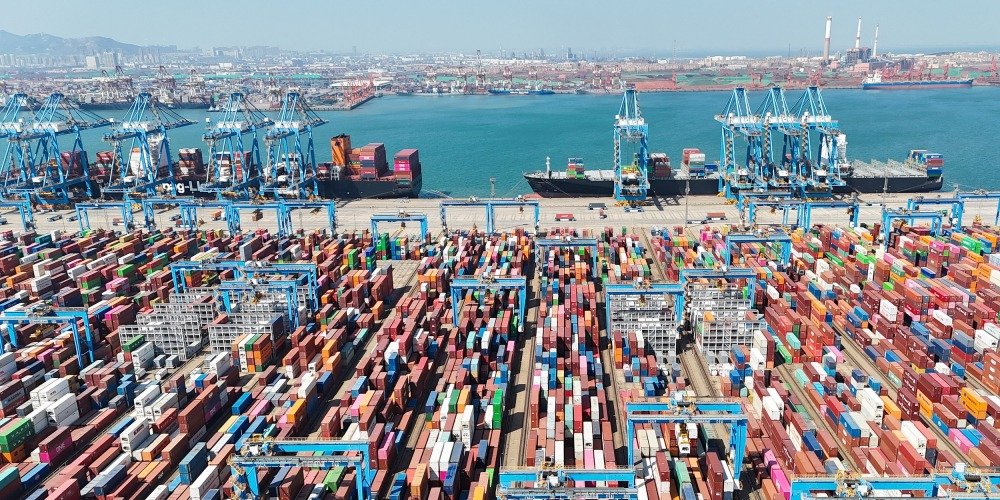
- QQCT (Qingdao Qianwan Container Terminal): The main workhorse for international container traffic. Highly automated and efficient.
- Dongjiakou Port Area: The expansion zone. This is where the super-deep-water berths are located, specializing in bulk commodities like iron ore and energy products.
- Cosmoport (Qingdao Cruise Home Port Area): Dedicated to Ro-Ro, vehicle imports/exports, and passenger services.
When Should You Choose Qingdao?
✅ Choose QINGDAO if:
- You are shipping frozen seafood, meat, or fresh fruit (Import or Export).
- Your suppliers are located in Shandong Province (Weifang, Yantai, Jinan, Linyi).
- You need the fastest connection to Korea or Japan.
- You are shipping tires, rubber products, or heavy machinery.
- You want to avoid the winter freezing issues common at Tianjin.
❌ Consider alternatives if:
- Your cargo is headed to Beijing (Tianjin is closer).
- You are relying heavily on the China-Europe Railway (Tianjin has a slight edge in rail frequency).
- Your supplier is strictly in the Yangtze River Delta (Shanghai/Ningbo is much closer).
Conclusion: The Reliable North
Qingdao Port offers a stability and specialization that complements the high-volume chaos of Shanghai and the tech-focus of Shenzhen. Its dominance in cold chain logistics makes it indispensable for the global food supply chain, while its geographic proximity to Korea and Japan keeps the wheels of Northeast Asian commerce spinning.
Sourcing tires, machinery, or frozen goods from North China?
Leverage our expertise in Qingdao customs clearance and cold chain monitoring. Contact us today for a tailored logistics solution that ensures your cargo arrives fresh and on time.
Read our previous guide: Shenzhen Port – The Electronics Powerhouse of the Greater Bay Area
Beyond the Coast: Unlocking Western China via Chongqing & Chengdu
For decades, international logistics focused almost exclusively on China’s coastline. But today, the real growth…
Qingdao Port: The Cold Chain King and Gateway to North China & Korea
Qingdao Port: North China’s Hub for Cold Chain, Heavy Industry, and Intra-Asia Trade While Shanghai…
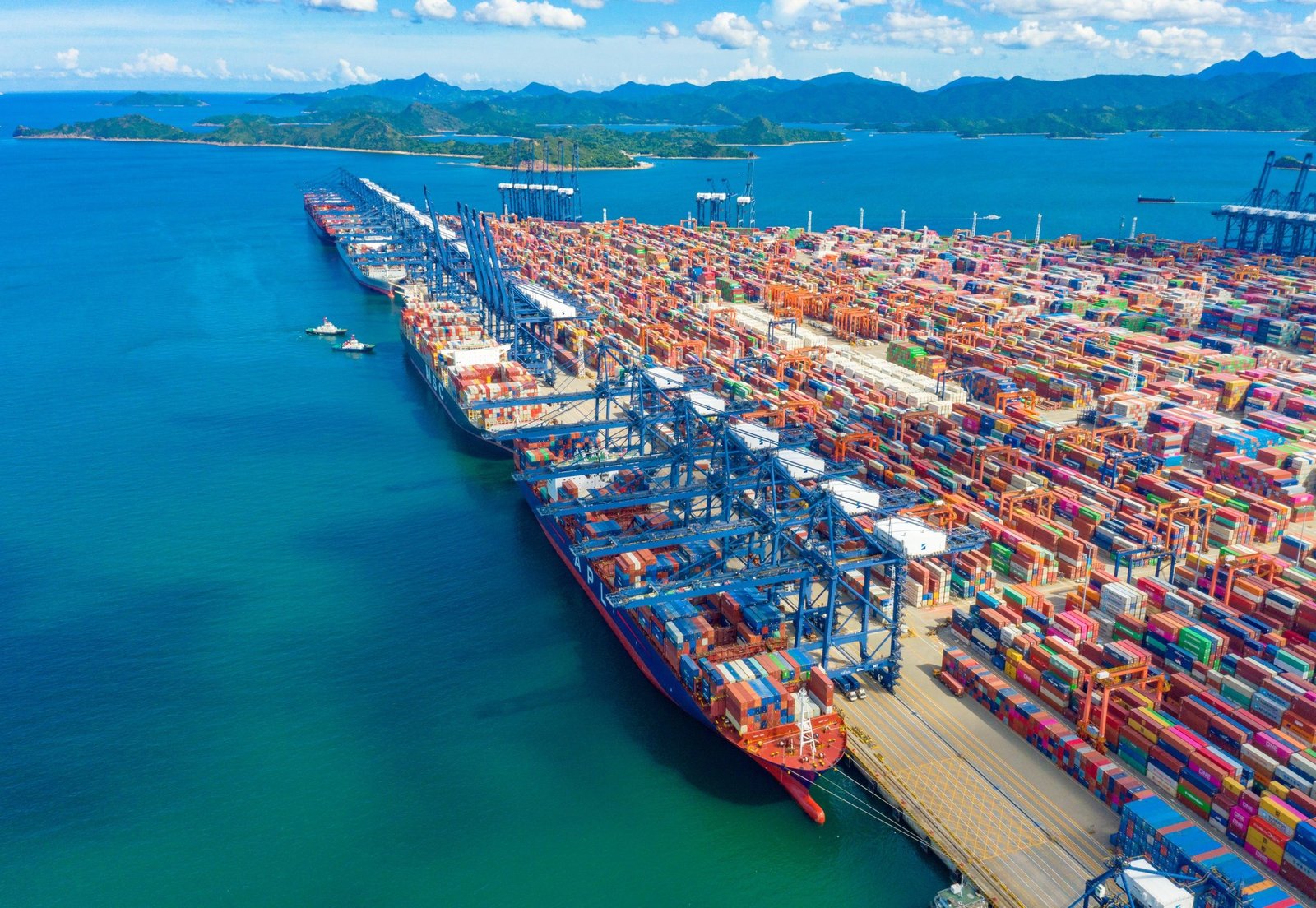
Shenzhen Port: The Electronics & E-Commerce Powerhouse of the Greater Bay Area
Shenzhen Port broke 35 million TEUs in 2025. Explore Yantian’s deep-water dominance, Shekou-Chiwan’s versatile role,…