Singapore and Port Klang sit on the Malacca Strait — the world’s most strategic shipping lane. Compare throughput, terminals, costs, and cargo fit to decide which hub moves your cargo best in 2026.
Singapore & Port Klang: The Twin Gateways of the Malacca Strait
Every ship moving between the Indian Ocean and the South China Sea passes through the Malacca Strait — and at its southeastern mouth stand two ports that define Southeast Asian logistics: Singapore and Port Klang. Together they handle more than 59 million TEUs annually. But they are not interchangeable.
For international shippers, the question is rarely “which is better?” It’s “which is right for my cargo, my destination, and my cost structure?”
This guide breaks down both ports — their scale, terminals, strengths, and the decision framework that helps you route smarter in 2026.
Singapore Port: The World’s Transshipment Champion
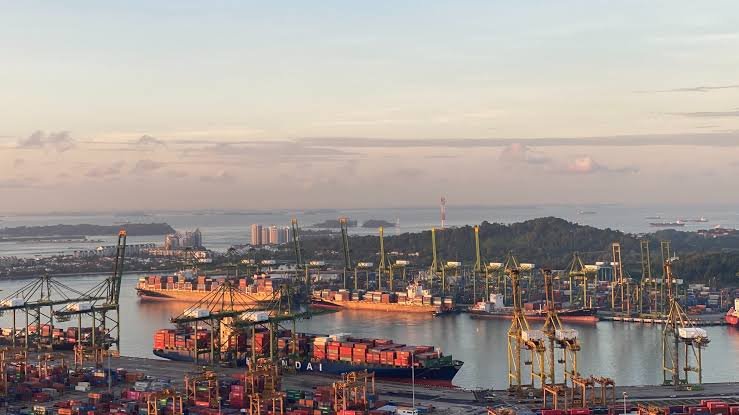
Singapore is not just a port; it is the world’s largest transshipment hub and the #2 container port globally after Shanghai. In 2025, it handled a record 44.5 million TEUs, up 8.6% year-on-year.
Terminal Architecture
PSA Singapore operates 56 container berths with a combined design capacity of 46.5 million TEUs, connected to 600 ports worldwide:
| Terminal | Role | Key Specs |
|---|---|---|
| Pasir Panjang Terminal | Flagship container hub | Up to 18m draft, ULCV-ready |
| Tuas Port | Future-integrated mega port | Phased opening since 2022; automated AGVs, electric cranes |
| Brani & Keppel | Gradually relocating to Tuas | Transition terminals |
| Jurong Port | Dry bulk, breakbulk, project cargo | Steel, cement, machinery |
By the 2040s, Tuas Port alone will deliver 65 million TEUs of annual capacity across 66 deep-water berths — the world’s largest fully automated container terminal.
Why Shippers Choose Singapore
✅ Unmatched connectivity — Daily sailings to China, Japan, Southeast Asia, Europe, and the US. If a carrier sails it, it calls Singapore.
✅ Transshipment dominance — ~85% of Singapore’s volume is transshipment, meaning your cargo can reach virtually any secondary port via feeder.
✅ World’s #1 bunkering hub — 56.77 million tonnes of marine fuel sold in 2025, including alternative fuels for dual-fuel vessels.
✅ Certainty & reliability — Schedule integrity, digital clearance, and a complete maritime services cluster (ship finance, insurance, crewing, repairs).
The Trade-off
Singapore is expensive. Terminal handling charges, agency fees, and bunker prices are among the highest in Asia. And because ~98% of its cargo is transshipment, it adds little value if your cargo is actually destined for Malaysia.
Port Klang: Malaysia’s Rising Global Top-10 Powerhouse
Just 300 km north of Singapore sits Port Klang, Malaysia’s largest port and, as of 2025, a top-10 global container port (Lloyd’s List ranking). It handled 15.14 million TEUs in 2025, a 3.4% increase over 2024.
Three-Terminal Structure
| Terminal | Focus |
|---|---|
| Westports | High-volume containers & transshipment; newer, more automated |
| Northport (MYNP) | Mixed cargo, conventional, and some containers |
| Southpoint | Liquid bulk, project cargo, specialized shipments |
💡 Port code reference: MYPKG is the primary UN/LOCODE. Always specify MYWP (Westports) or MYNP (Northport) on your booking to avoid misrouted cargo.
Why Shippers Choose Port Klang
✅ Gateway to Malaysia — ~45% of Klang’s volume is local cargo, serving the Klang Valley, Kuala Lumpur, Penang, and Johor industrial belts. If your goods are for Malaysia, Klang is your port.
✅ Cost-competitive — Terminal handling charges are significantly lower than Singapore’s. Westports’ published transshipment tariffs run at a 49–52% discount to PSA Singapore.
✅ Balanced cargo profile — Unlike Singapore’s transshipment-only model, Klang handles a healthy mix of gateway and transshipment cargo, giving it resilience.
✅ Growing carrier network — Approximately 40 mainline operators (MLOs) now call at Port Klang, with expanding direct services to Europe, Africa, and the Middle East.
✅ Congestion-relief alternative — During Singapore’s 2026 congestion peaks (anchorage waits hit 5–7 days in June 2026), many forwarders successfully rerouted to Klang.
Head-to-Head: Singapore vs. Port Klang
| Dimension | Singapore | Port Klang |
|---|---|---|
| 2025 Throughput | 44.5M TEU | 15.14M TEU |
| Global Ranking | #2 | #10 |
| Primary Role | Transshipment (~85%) | Balanced (45% gateway / 55% transshipment) |
| Key Terminals | Pasir Panjang, Tuas, Brani | Westports, Northport, Southpoint |
| Cost Level | Premium (highest in ASEAN) | Competitive (up to 50% lower THC) |
| Best For | Global transshipment, bunkering, high-value logistics | Malaysia-destined cargo, cost-sensitive transshipment |
| Connectivity | 600 ports, daily sailings | Growing; 40+ MLOs |
| Future Capacity | Tuas: 65M TEU by 2040s | Westports 2 + Carey Island in development |
Decision Framework: Which Port for Your Cargo?
🎯 Choose SINGAPORE if:
- Your cargo is transshipping to a tertiary port (Indonesian islands, Philippine provinces, smaller ASEAN ports)
- You need maximum frequency and schedule certainty
- You require bunkering (especially alternative fuels)
- Your shipment involves high-value or time-critical goods where reliability trumps cost
- You’re moving regional distribution center (RDC) stock for multinational operations
🎯 Choose PORT KLANG if:
- Your cargo is destined for Malaysia (imports into Klang Valley, Penang, Johor)
- You’re an export from Malaysia (electronics, palm oil products, rubber, furniture, machinery)
- Cost is a primary driver — you can tolerate slightly lower frequency for 30–50% lower terminal costs
- You’re using Klang as a congestion-relief alternative to Singapore during peak periods
- Your cargo can leverage rail or road into Thailand or back to Singapore
Shanghai Port: Your Ultimate Guide to the World’s Busiest Container Hub
2026 Reality Check: The Congestion Divergence
A critical trend this year: ASEAN ports are experiencing split congestion. Singapore PSA and Vietnam’s newer terminals are operating at ~95% utilization — manageable. But Port Klang hit 98% utilization during peak windows in mid-2026, with Phase 2 expansion now pushed to Q4 2026.
What this means for shippers:
- Book early — Secure Klang slots 14 days ahead during peak periods
- Prepare documentation electronically — Verify HS codes before submission to avoid clearance delays
- Coordinate inland transport early — Trucking capacity around Klang is under high demand
- Consider bonded warehousing — For goods requiring further processing or distribution
⚠️ Both ports face monsoon-season schedule variability (June–September). Build buffer days into your supply chain planning.
Bottom Line: Two Ports, One Strategy
Singapore and Port Klang aren’t competitors so much as complements. The smartest logistics operations in 2026 use both:
- Singapore as the undisputed transshipment king for global connectivity
- Port Klang as the cost-efficient gateway for anything touching Malaysia
Understanding when to use which — and having a forwarder who can pivot between them — is the real competitive advantage in Southeast Asian shipping.
Planning a shipment through the Malacca Strait?
Our logistics team provides weekly updated transit times, capacity forecasts, and routed quotes for both Singapore and Port Klang. Contact us to find the optimal hub for your specific cargo.
Red Sea & Suez Canal Shipping Route: Port Guide and Crisis Rerouting in 2026
How to Choose a Freight Forwarder in China: A Strategic Guide for Global Shippers
Selecting the right freight forwarder is one of the most critical decisions for importers and…
de minimis elimination 2026 china imports fba
For years, cross-border e-commerce ran on a simple, powerful premise: shipments valued at $800 or…

Tariff Engineering: How to Legally Cut Your US Import Duty Bill in 2026
By now in this series, you understand the compliance chain: Amazon FBA forces DDP terms,…