LCL Consolidation for Amazon FBA: Moving Small Batches from China to FBA Without Breaking the Bank
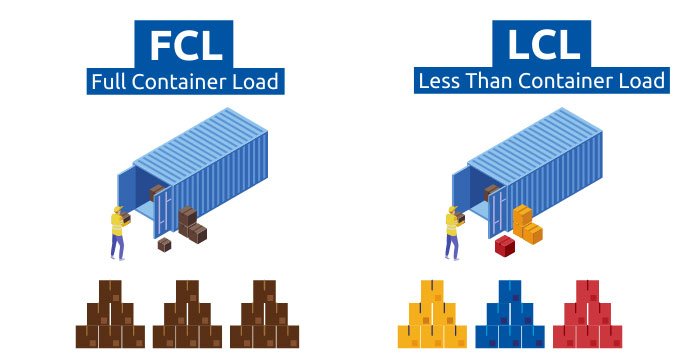
If you’re an Amazon seller sourcing from China but can’t yet fill a 40ft container, LCL (Less than Container Load) consolidation is your financial lifeline. By sharing container space with other shippers, you unlock ocean freight economics — typically $80–$180 per CBM — without tying up $3,000–$5,000 in a full container that sits in your supplier’s yard for weeks.
But here’s the catch: LCL is a process, not just a price. Amazon’s strict inbound requirements, the multi-stage handling of consolidation/deconsolidation, and the 38–64 day door-to-FBA transit window mean that one misstep can derail your entire replenishment cycle.
According to Amazon Global Logistics’ official 2026 transit guide:
- Fast Ocean (LCL) from Ningbo/Shanghai/Shenzhen/Xiamen to US West Coast FBA: 38–48 days
- Standard Ocean (LCL) to US West Coast FBA: 54–64 days
- Standard Ocean (LCL) to US East Coast FBA: 53–63 days
This guide gives you the complete playbook — from deciding if LCL is right for your SKU, to engineering a rejection-proof shipment.
What Is LCL Consolidation (and Why FBA Sellers Love It)?
LCL means your cargo shares a container with other shippers. Your freight forwarder consolidates multiple shipments at the origin CFS (Container Freight Station), stuffs them into a shared container, and at destination, deconsolidates them at another CFS before drayage to the final destination.
Amazon’s own AGL program confirms: “Amazon consolidates your LCL shipments with inventory from other Amazon sellers and ships directly to fulfillment centers.” This means you can ship the right amount of inventory without waiting to fill an entire container.
Why FBA sellers choose LCL:
✅ Cash flow friendly — No $3,000+ capital lockup per container
✅ Frequent small batches — Typical sweet spot is 5–20 pallets per shipment
✅ 35–45% cheaper than air freight per unit
✅ Multi-SKU flexibility — Perfect for sellers with 10–50 SKUs who can’t fill a container with one product
✅ Market testing — Launch 2–5 CBM of a new SKU before scaling
The LCL vs. FCL Breakeven: When Does a Full Container Win?
This is the single most important math in FBA logistics. Based on 2026 rate data:
| Shipment Size | Recommended Mode | Why |
|---|---|---|
| Below ~2 CBM | Courier (DHL/FedEx) or air express | LCL minimums and fixed fees make small CBM uneconomic |
| 2–12 CBM | LCL | Per-CBM pricing beats FCL; 1–8 CBM is the classic LCL zone |
| 12–15 CBM | Breakeven zone | LCL and 20GP FCL costs converge — compare actual quotes |
| Above 15 CBM | FCL | Full container becomes cheaper per unit; faster (no CFS handling) |
| 28+ CBM | 40ft FCL | Maximum per-unit economics |
A 20GP container costs $800–$2,000 base freight (China–USA) and holds 25–28 CBM. LCL on the same route runs $20–$40/CBM + consolidation/deconsolidation charges (~$80–$150 each end). At ~15 CBM, LCL and 20GP FCL costs typically converge.
💡 Rule of thumb: LCL charges by weight or volume, whichever is greater (the “W/M rule”). For bulky, light products (e.g., foam cushions, large plastic items), you’ll be billed on volume. Measure cartons carefully before booking.
High Amazon Ad Costs in 2026: How Cross-Border Logistics Protects Your Profit and Powers Growth
2026 LCL Rate Landscape: What You’ll Actually Pay
Per recent 2026 market data from major forwarders:
| Route | LCL Rate (per CBM) | Total Door-to-FBA Time |
|---|---|---|
| Shanghai → LA/LB (West Coast ONT8) | $110–$150/CBM | 45–55 days (AGL Standard) |
| Shenzhen/Yantian → LA/LB | $105–$145/CBM | 38–48 days (AGL Fast Ocean) |
| Ningbo → US East Coast (Savannah) | $180–$250/CBM | 53–63 days |
| Xiamen → US Gulf ports | $160–$220/CBM | 50–60 days |
Add $200–$600 peak-season surcharge for July–October bookings.
Hidden costs to watch in your LCL quote:
- Origin & destination CFS handling fees ($15–$40/CBM per end)
- THC (Terminal Handling Charges) — $150–$400 per container equivalent
- Documentation/BL fee — $35–$75 per shipment
- ISF filing (10+2) — $35–$75 for US ocean imports
- Customs entry + single-entry bond — $150–$300 + $75–$275
- Drayage to FBA — $400–$1,000 per container equivalent
- Merchandise Processing Fee (MPF) — 0.3464% of value ($33.58 min / $651.50 max)
- Harbor Maintenance Fee (HMF) — 0.125% of value
Always request a DDP (Delivered Duty Paid) all-in quote so you see the true landed cost upfront.
The LCL Process: 6 Stages from Factory to FBA Shelf
Unlike FCL (which is “stuff at factory → ship → receive”), LCL has extra handling stages that add 5–15 days to your timeline:
- Origin CFS receiving (1–3 days) — Your cargo arrives at the consolidator’s warehouse
- Consolidation (2–5 days) — Forwarder groups your cargo with others into a container
- Ocean transit (12–25 days, depending on route)
- Destination CFS deconsolidation (2–4 days) — Container is unpacked; your cargo is separated
- US customs clearance (1–3 days)
- Drayage + FBA appointment (1–5 days) — Final delivery to the FC
Total: 4–5 weeks door-to-door is the realistic baseline for China → US West Coast.
The 5 Non-Negotiable FBA Requirements for LCL
This is where most LCL shipments fail. Amazon’s inbound requirements are strict, and LCL’s shared nature makes compliance harder, not easier.
1. FNSKU Labels MUST Be Applied BEFORE Consolidation
Amazon requires FNSKU barcodes on every unit. Your consolidator must coordinate with you to apply these before packing into the master carton. Applying labels after consolidation creates bottlenecks at the prep center — or worse, at the Amazon FBA gate.
⚠️ Common failure: Supplier ships unlabeled goods to the CFS; forwarder can’t apply FNSKU (they don’t have your Seller Central data); cargo sits in limbo; container departs without your goods; you miss the sailing and lose 7+ days.
2. Advance Shipment Notice (ASN) — Submit Early
Provide ASN to Amazon before the LCL vessel departs. Include:
- Container number
- Pallet count
- Weight and dimensions
- Expected delivery window
Delay here causes FBA gate delays and missed appointments.
3. Accurate Carton Dimensions & CBM
LCL pricing depends on final carton data. Before booking, confirm:
- Carton count, dimensions (cm or inches), total CBM
- Gross/net weight per carton
- SKU list and per-carton pack configuration
If your supplier provides “estimated” carton sizes, you risk re-quotes, measurement disputes, or warehouse receiving delays.
4. HS/HTS Classification Accuracy
US CBP’s increased scrutiny of low-value e-commerce shipments in 2026 means your HS codes must be precise. Vague descriptions (“electronics accessory”) trigger holds. Provide detailed product descriptions, accurate values, and clear IOR (Importer of Record) information.
5. Amazon Appointment Locked BEFORE Vessel Departure
This is the #1 cause of LCL disasters. A seller’s painful lesson: “The Shipment ID on the outer carton marks did not match the labels. After the shipment arrived at the US West warehouse, it first failed receiving inspection. After several rounds of communication, it still couldn’t get an inbound slot because there was no appointment, and it sat in the overseas warehouse for about a week.”
Lock your FBA appointment before the vessel sails. Not after. Not “upon arrival.” Before.
The LCL Best-Practice Playbook
📅 8 Weeks Before Stockout:
- Forecast demand 6–8 weeks ahead
- Confirm carton data, HS codes, FNSKU labels with supplier
- Book LCL space with your forwarder (2–3 weeks ahead for peak season)
📅 5 Weeks Before Stockout:
- Supplier completes production, applies FNSKU labels
- Goods delivered to origin CFS
- Create Amazon shipment plan, generate Shipment ID
- Submit ASN with container details
📅 4 Weeks Before Stockout:
- Container departs China
- Lock FBA inbound appointment before departure
- Monitor vessel via MarineTraffic
📅 1 Week Before Stockout:
- Vessel arrives US port, deconsolidation begins
- Customs clearance (ensure ISF, POA, IOR all aligned)
- Drayage appointment confirmed with carrier
📅 Stockout Date:
- Cargo delivered to FBA, receiving begins
- Monitor FBA inbound dashboard; inventory goes live within 1–5 days
When LCL Is NOT the Right Choice
❌ Avoid LCL if:
- Your shipment is below 2 CBM — courier/air express is cheaper and faster
- You’re facing a stockout emergency (≤15 days of cover) — switch to air freight
- Your cargo is highly fragile or valuable — multiple CFS touches increase damage/theft risk
- You’re shipping standalone lithium batteries (UN3480) — Amazon AGL prohibits these; requires specialized DG forwarder
- You have 15+ CBM regularly — FCL gives you faster transit and lower per-unit cost
The Battery/Hazmat Exception
If your product contains lithium batteries, LCL becomes complicated. Amazon’s policy:
- Standalone lithium-ion batteries (UN3480) and lithium metal batteries (UN3090): Prohibited via Amazon Global Logistics
- Allowed lithium-ion battery configurations: 0–≤100 Wh (US FBA acceptable)
- Mandatory documentation: UN38.3 test summary, SDS/MSDS, battery exemption sheet uploaded to Amazon Seller Central
For battery-powered products, many sellers use this hybrid approach:
- Ship the majority of inventory via LCL (non-battery components or compliant UN3481 configurations)
- Establish a US 3PL or AWD (Amazon Warehousing & Distribution) buffer
- Use air freight for emergency battery SKU replenishment (with proper DG declaration)
💡 Amazon’s AWD (Ship to Amazon Warehousing and Distribution) LCL option is available from Shenzhen, Shanghai, Ningbo, and Xiamen to US West Coast (45–55 days) and US East Coast (57–67 days). This is the recommended route for battery-containing products — Amazon manages the compliance and distribution to FCs automatically.
Choosing Your LCL Route: Port Selection Matters
| Origin Port | Best For | AGL Fast Ocean LCL to US West Coast |
|---|---|---|
| Yantian (Shenzhen) | GBA-sourced electronics, e-commerce | ✅ Available, 38–48 days |
| Ningbo | Zhejiang-sourced goods, furniture, hardware | ✅ Available, 38–48 days |
| Shanghai | Yangtze River Delta suppliers | ✅ Available, 38–48 days |
| Xiamen | Fujian footwear, textiles, ceramics | ✅ Available, 38–48 days |
| Qingdao | Shandong tires, machinery, cold chain | ✅ Standard LCL available (longer transit) |
All four major fast-ocean LCL origins (Ningbo, Shanghai, Shenzhen, Xiamen) offer 38–48 day door-to-FBA transit to US West Coast per Amazon’s official guide.
Split-Shipment Strategy: The Smart Seller’s Hybrid
Many successful FBA sellers don’t choose between LCL and air — they use both:
📦 80% of inventory → LCL ocean (cost optimization)
✈️ 20% of inventory → Air freight (buffer for stockout protection)
This “split shipment” approach:
- Protects against stockouts during LCL transit delays
- Allows you to test demand with smaller air batches
- Keeps your cash flow balanced — most capital in low-cost LCL, emergency buffer in fast air
- Maintains your Amazon IPI score by preventing stockout events
During Q4 2025, Los Angeles and Long Beach experienced significant congestion, adding 10–15 days to ocean freight transit. Sellers using the split-shipment strategy weathered the storm; LCL-only sellers faced stockouts.
Bottom Line: LCL Is a System, Not a Shipment
LCL consolidation for Amazon FBA succeeds when you treat it as a managed process, not a one-off booking. The winning formula:
- Right-sized volume — 2–15 CBM is the LCL sweet spot
- Early labeling — FNSKU applied before CFS consolidation
- Locked appointments — FBA inbound slot secured before vessel departure
- Accurate documentation — ASN, HS codes, IOR/POA all aligned
- Buffer inventory — 60+ days of cover; split-shipment with air for emergencies
- Trusted forwarder — One who understands FBA prep, consolidation sequencing, and destination CFS operations
Sourcing from China and shipping 5–20 pallets to Amazon FBA?
Our LCL consolidation service includes: origin CFS receiving in Shenzhen/Shanghai/Ningbo, FNSKU labeling coordination, ASN submission, AGL-compatible direct-to-FBA delivery, and appointment locking before vessel departure. Contact us for a DDP all-in quote with transparent CBM pricing.
Yantian Express Ship for Amazon FBA: The Definitive 2026 Guide
How to Choose a Freight Forwarder in China: A Strategic Guide for Global Shippers
Selecting the right freight forwarder is one of the most critical decisions for importers and…
de minimis elimination 2026 china imports fba
For years, cross-border e-commerce ran on a simple, powerful premise: shipments valued at $800 or…

Tariff Engineering: How to Legally Cut Your US Import Duty Bill in 2026
By now in this series, you understand the compliance chain: Amazon FBA forces DDP terms,…