Red sea suez canal shipping route guide. The Red Sea–Suez corridor carries ~12% of global trade. Learn the key ports (Port Said, Suez, Jeddah, Aqaba, Djibouti), latest rerouting trends, and how to keep your Asia–Europe cargo moving in 2026.
Red Sea & Suez Canal: The World’s Most Critical (and Volatile) Shipping Artery
If the Shanghai Port article was about scale, this one is about strategy. The Red Sea–Suez corridor connects Asia to Europe and the US East Coast, carrying roughly 12% of global trade and ~30% of container traffic. For freight forwarders and importers, it is the shortest ocean bridge between the factories of East Asia and the consumers of Western Europe.
But since late 2023, “Suez reliability” has become a moving target. Houthi attacks in the southern Red Sea have forced most major carriers (Maersk, MSC, CMA CGM, Hapag-Lloyd) to divert around the Cape of Good Hope, adding 10–14 days and significant bunker cost to every Asia–Europe round trip.
This guide breaks down the corridor’s key ports, what’s still moving, and how smart shippers are adapting in 2026.
The Anatomy of the Corridor
Think of the route as three segments:
- Mediterranean Entrance → Port Said (Egypt)
- The Canal itself → Suez & Ain Sokhna (Egypt)
- Red Sea transit → Saudi Arabia, Jordan, Israel, Djibouti, Sudan
Let’s look at the ports that matter most to international cargo.
North End: Port Said – Gateway to the Mediterranean
Port Said (Egypt) sits at the canal’s northern mouth. It is the first call for vessels exiting the canal bound for Europe, and the last for those entering from the Med.
- Terminals: Port Said East (container mega-terminals, deep water) vs. Port Said West (older, smaller feeders).
- Role: Primarily a transshipment hub. If you’re moving LCL or feeder cargo into the Eastern Med (Turkey, Greece, Black Sea), your boxes often touch Port Said.
- Watch out: Congestion spikes when canal transits are delayed; trucking from Port Said to Cairo takes ~3 hours but border paperwork can drag.
Canal Proper: Suez & Ain Sokhna – The Industrial Backyard
Just south of the canal’s midpoint lies Suez Port, but the real logistics star here is Ain Sokhna (El Sokhna) on the western Red Sea coast.
- Sokhna has deep-water container terminals and direct rail + highway links to Cairo and the Nile Delta industrial belt. For importers bringing machinery, auto parts, or consumer goods into Egypt itself, Sokhna is usually faster than Port Said.
- Suez still handles bulk, breakbulk, and some container feeders, but its role is increasingly eclipsed by Sokhna for box trade.
💡 Pro tip: If your supplier is in Egypt or you’re using Egypt as a Near-East sourcing base, ask your forwarder to compare Sokhna vs. Alexandria — Sokhna wins for Red Sea origin cargo; Alexandria wins for Mediterranean/European connections.
Red Sea Workhorses: Jeddah, Aqaba, Djibouti, Port Sudan
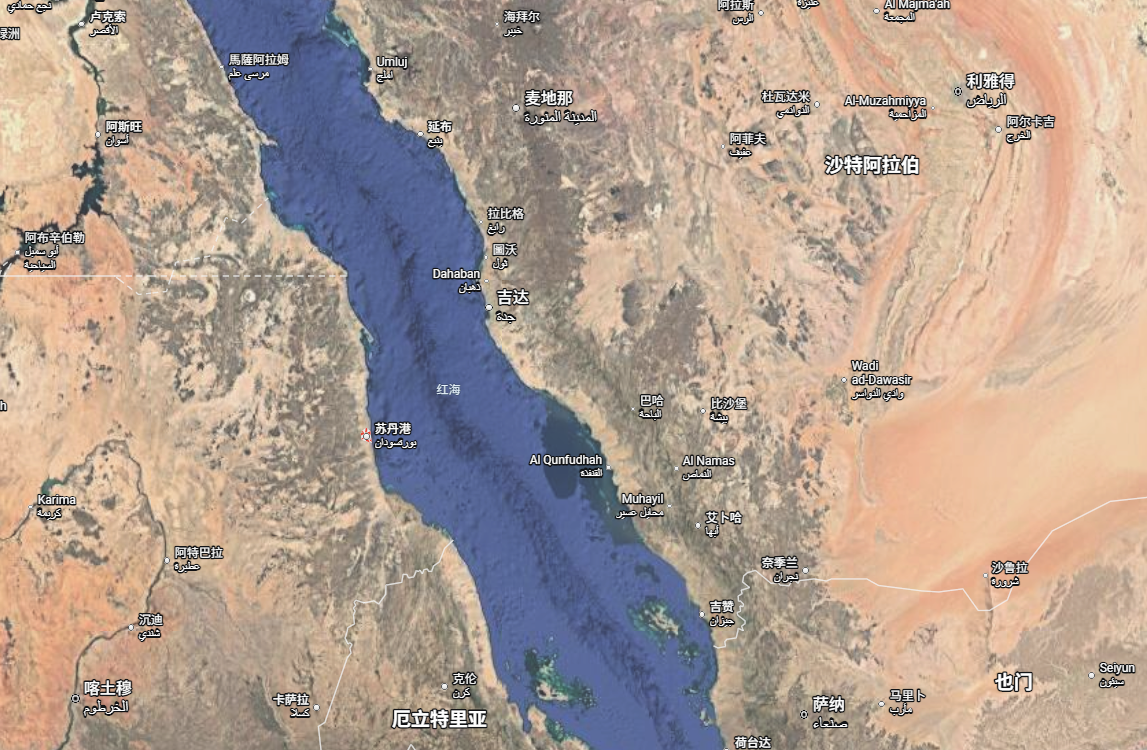
Once you clear the canal and head south, these are the ports that carry the region’s weight:
🔹 Jeddah Islamic Port (Saudi Arabia) – The king of the Red Sea. Handles the bulk of Saudi imports (electronics, food, automotive) and is a major transshipment point for Africa-bound feeders. Since 2026, Jeddah has gained an extra role: as a land-bridge gateway to the Persian Gulf. Both MSC and Hapag-Lloyd now discharge at Jeddah, truck ~1,300 km across Saudi to Damman on the Gulf coast, then feed into Dubai/Jebel Ali, Abu Dhabi, Bahrain, Iraq and Kuwait — bypassing the Hormuz risk entirely.
🔹 Aqaba (Jordan) – Small but strategic. Serves Jordan, and via road/truck, leaks into Iraq and even parts of Syria. High-value cargo (pharma, aerospace components) often prefers Aqaba for its simpler customs vs. larger hubs.
🔹 Djibouti – The Horn of Africa’s only deep-water gateway. Critical for Ethiopian landlocked cargo (Addis Ababa reaches it via the Addis–Djibouti Railway). Also a major Chinese and US logistics footprint — worth watching for geopolitical routing shifts.
🔹 Port Sudan (Sudan) – Historically a cotton/agro export port; lately volatile due to Sudan’s internal conflict. Most forwarders currently avoid unless contractually obligated.
The 2026 Reality: What “Shipping via Suez” Actually Means Now
Here’s the part your procurement team actually cares about:
| Scenario | Transit Time (Asia → North Europe) | Cost Impact | Who’s Using It |
|---|---|---|---|
| Via Suez (pre-2023 baseline) | ~24–28 days (Shanghai → Rotterdam) | Baseline | Pre-crisis normal |
| Suez open, no diversion | Same, but insurance + war risk premium applies | +$50–150/TEU war risk | Limited; mostly tankers/gas, some container |
| Cape of Good Hope diversion | ~34–42 days | +$800–2000/TEU (fuel + days) | Most Asia–Europe container services since late 2023 |
| Land-bridge via Jeddah → Gulf | Ocean ~18 days (Asia→Jeddah) + 3-day truck + feeder | Competitive vs. Hormuz-risk premium | New MSC/Hapag-Lloyd Persian Gulf service, May 2026 |
Decision Framework: Should You Still Plan for Suez?
✅ Stick with Suez routing if: Your cargo is Red Sea–destined (Saudi, Jordan, Egypt, Israel, Djibouti), or you’re using the new Jeddah land-bridge to the Gulf.
⚠️ Consider Cape of Good Hope if: You’re Asia → Europe and can absorb 10–14 extra days; many carriers have baked Cape routing into their permanent winter/spring schedules anyway.
🔄 Hybrid approach: Some shippers split — FCL heavy/non-urgent via Cape, urgent replenishment via air to Europe + road distribution.
The Red Sea–Suez corridor isn’t “broken” — it’s re-priced and re-routed. For logistics professionals, the win in 2026 isn’t betting on when the canal goes back to “normal.” It’s building optionality: a forwarder who can pivot you between Port Said, Jeddah land-bridge, and Cape diversion without rewriting your whole supply chain.
Planning an Asia–Europe or Asia–Med shipment and not sure whether Suez or Cape makes sense for your SKU?
Our team tracks carrier schedule changes weekly. Get in touch for a routed quote that prices in war-risk, bunker, and transit-time trade-offs.

How to Choose a Freight Forwarder in China: A Strategic Guide for Global Shippers
Selecting the right freight forwarder is one of the most critical decisions for importers and…
de minimis elimination 2026 china imports fba
For years, cross-border e-commerce ran on a simple, powerful premise: shipments valued at $800 or…

Tariff Engineering: How to Legally Cut Your US Import Duty Bill in 2026
By now in this series, you understand the compliance chain: Amazon FBA forces DDP terms,…