
In the fast-paced world of international logistics, cargo moves across oceans, but paperwork rules the world. Among all shipping documents, none is more critical than the Ocean Bill of Lading (B/L).
Whether you are an e-commerce entrepreneur scaling your private label brand or a seasoned importer navigating complex supply chains, misunderstanding the B/L can lead to detained cargo, financial loss, or legal disputes.
This guide breaks down the essentials of the Ocean Bill of Lading: who issues it, who holds it, and why it is the single most important document in your shipping arsenal.
Who Issues the Bill of Lading and to Whom?
The Bill of Lading is not just a random receipt; it is a legally binding document issued at the very start of the sea journey.
The Issuer: The Carrier
The B/L is issued by the Carrier (the shipping line, such as Maersk, MSC, or COSCO) or their authorized agent (such as a freight forwarder: langxu freight).
- It signifies that the carrier has received the goods in good condition (or loaded them onto the vessel) and is now responsible for their safe delivery.
The Recipient: The Shipper
The B/L is issued and handed over to the Shipper (the exporter, the supplier, or the seller).
- Once the shipper receives the original B/L, they hold the “title” to the goods.
- The shipper then uses this document to negotiate payment with the buyer (consignee) or sends it to the bank for payment processing (under Letter of Credit terms).
The Flow:
- Carrier receives goods → Issues B/L.
- Shipper receives B/L → Sends B/L to Buyer/Bank.
- Buyer receives B/L → Presents B/L to Carrier at destination to collect goods.
The Nature and Functions of the Ocean B/L
Why is this document so powerful? Under international trade law, the Ocean Bill of Lading serves three distinct and critical functions.
1. A Receipt of Goods
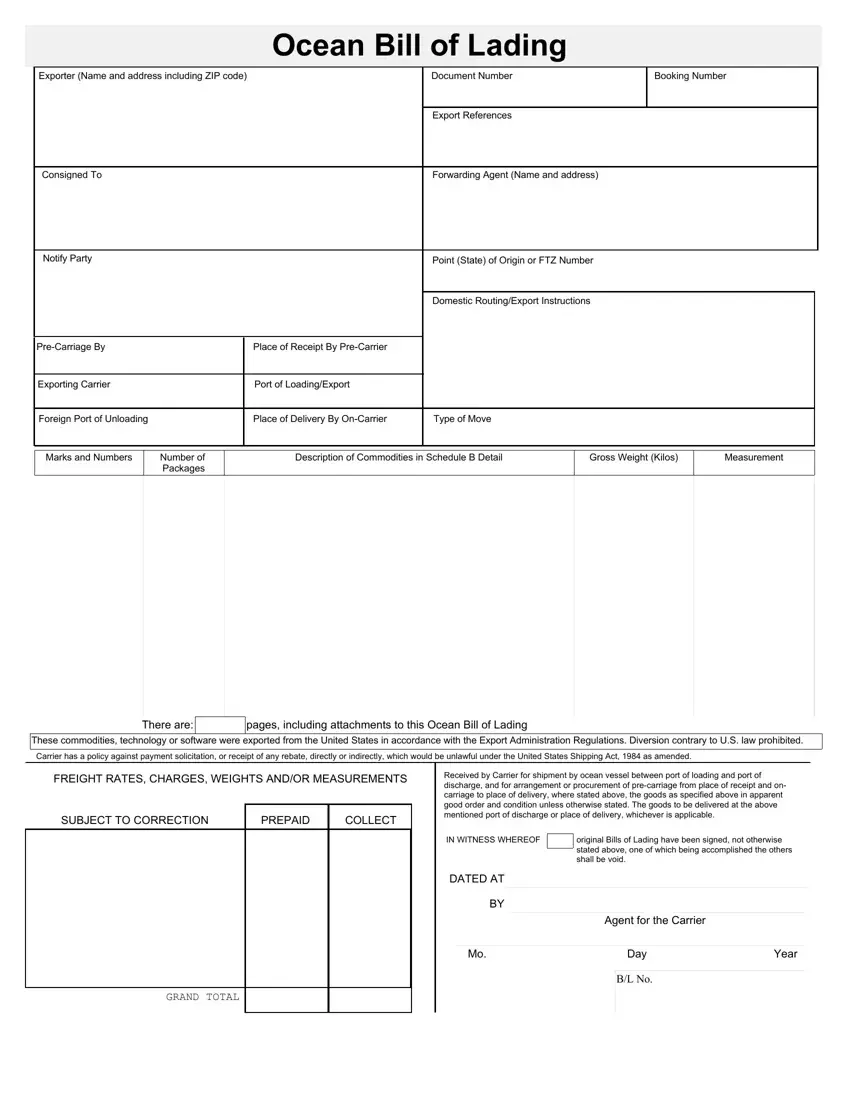
At its most basic level, the B/L is a receipt. It proves that the carrier has taken possession of the cargo. It details:
- Quantity and weight of the goods.
- The apparent condition of the packaging (e.g., “Received in apparent good order and condition”).
- If the packaging is damaged upon loading, the carrier will note this on the B/L (a “Dirty B/L” or “Claused B/L”), which can cause issues with banks and insurance.
2. Evidence of the Contract of Carriage
The B/L outlines the terms and conditions under which the carrier agrees to transport the goods. It defines the rights, liabilities, and responsibilities of both the shipper and the carrier. In case of a dispute (e.g., damaged cargo or delay), the B/L is the legal reference point.
3. Document of Title (The Most Critical Function)
This is what sets the Ocean B/L apart from other transport documents (like air waybills).
- It represents the goods. Whoever legally holds the Original B/L owns the cargo.
- It is negotiable. Because it represents title, it can be bought, sold, or traded while the goods are still at sea.
- It is required for delivery. For “Original B/L” shipments, the buyer cannot pick up the goods at the destination port without presenting the physical original document. This ensures the seller gets paid before the buyer gets the goods.
Why This Matters for E-Commerce & Importers
For e-commerce sellers moving from dropshipping to bulk imports (B2B), understanding the B/L is your transition point from amateur to professional.
- Control Your Supply Chain: If you are the buyer (Consignee), ensuring the B/L is correctly issued protects you from suppliers shipping incorrect quantities.
- Securing Payment: If you are the supplier, retaining the Original B/L until payment is confirmed is your best leverage against non-paying buyers.
- Speed vs. Security: Traditional Original B/Ls are secure but slow (they must be couriered physically). Modern supply chains often use “Telex Release” or “Sea Waybills”, which are electronic versions allowing for faster pickup, though they offer less security for the seller.
The Ocean Bill of Lading is more than just paperwork; it is the currency of international trade. By understanding who issues it and its function as a title document, you can better protect your assets, streamline your logistics, and negotiate with confidence.
Are you preparing for your next bulk shipment? Ensure your Incoterms and B/L terms align with your payment methods to avoid costly port delays.
Mastering the Ocean Bill of Lading
In the fast-paced world of international logistics, cargo moves across oceans, but paperwork rules the…

e-commerce How to Secure Your Supply Chain and Amplify Your Brand
Your shop is growing. The adrenaline of the first few sales has settled into a…

Top 10 Best-Selling Air Purifiers in Canada 2025
While brands like Dyson and Honeywell dominate the shelves, a significant portion of the world’s…